Cultivating Your Child’s Inner Voice
March 13th, 2026
The Power of Parents’ Words
As parents, we are the primary architects of our children’s internal landscapes. While we do not create their inner dialogue entirely, we are the most significant contributors to how they speak to themselves. And while children may forget our exact words, they vividly remember the feelings those words evoke. Even when a child seems unaffected on the surface, our language is shaping their perception and memory in ways that can be helpful or harmful for years to come.
Before reacting, it is helpful to identify your own triggers. Are you responding out of fatigue, fear, or simple familiarity with a negative pattern? Ask yourself:
- Am I correcting or criticizing?
- Am I teaching or shaming?
- Would I say this to a friend?
When making a correction, we should speak to behavior and not identity. Labeling a child creates identity statements that tend to stick. Instead, naming a specific emotion or behavior—such as saying, “the way you spoke to that adult was not respectful”—allows the child to see the situation as temporary and changeable rather than a fixed character flaw.
To help your child through challenges, consider replacing criticism with growth-oriented language:
- Instead of focusing on failure, try: “You’re still learning. What could be different next time?”
- When boundaries are crossed: “That choice wasn’t okay.”
- When they are overwhelmed: “You’re upset. I’m here if you want me to help you calm down.”
If you catch yourself mid-sentence using hurtful words, be willing to stop and "reverse course" immediately. It is perfectly okay to say, “That’s not right. I want to start that again”.
The Art of the Repair
We all have those regrettable moments when we hurt our children’s feelings. However, repair is not about erasing the mistake; it is an intentional opportunity to adjust your words and reshape their experience.
Effective repair involves four key steps:
- Acknowledgment: Do not wait and hope the moment is forgotten.
- Impact: Ask how they were affected by what you said.
- Adjustment: Talk about what you would do differently next time.
- Reconnection: Forgive yourself and reconnect over something positive.
Find Moments for Meaningful Pride
Even when expressing pride, intentionality matters. Keep your praise proportional to the achievement and check in with how the child feels about their own success. Sometimes, a simple sticky note can be more impactful than a spoken word. Most importantly, show pride when they encounter and navigate obstacles, not just when they achieve a positive outcome.
The power of our words does not end the moment they are spoken. We always have the opportunity to shape the experience that follows and, in doing so, help our children build a resilient and kind inner voice.
More News from Charlotte Prep
 Sep24Building the Foundations for Student Learning
During our in-service professional learning day in August, we reflected on six years of curriculum development since launching our summer grant program in 2021. What began that year as a group of only eight teachers has grown into a cohort of twenty-four summer grant participants, all working to strengthen and elevate our academic program.
See Details Sep17Get to Know Katie Keels
Joining Charlotte Prep as director of philanthropy this year, Katie Keels brings 14 years of advancement experience, 11 of which were spent at a K-8 school. Read our Q&A to discover what inspires her approach to philanthropy and her vision for nurturing a joyful, community-centered culture of giving.
See Details Sep3A Campus Culture Where Everyone Matters
Last week, a parent told me that her child begs to come to school and doesn’t want to leave at the end of the day, something she never felt as a kid. That conversation offered a great image for what I want our theme to be this school year: Mattering.
See Details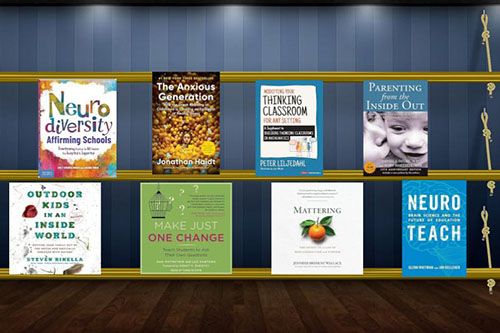 Jun4What's on Our Summer Reading List
The upcoming break provides a great opportunity for our faculty and staff to dive into reading they may not have had time for during the school year. While their summer reading lists will surely include a few fun beach picks, many are also exploring titles that will inspire their work in the year ahead, whether through books on pedagogy, young adult novels, or picture books they may bring into their classrooms. See what our faculty and staff are adding to their summer stacks.
See Details