Tips for Parenting Healthy Tech Use
February 23rd, 2023
 Raising a child in an age when our lives are saturated with technology is a more challenging task than any of us would have imagined when we first were initiated into parenthood. As parents, we have the difficult task of teaching our children the utility and wonder of technology while protecting them from overexposure, overuse, and the myriad consequences it can have for the mind and body.
Use these tips to help establish healthy dialogue and boundaries with your children.
- Don’t assume that your child knows what is right and what is wrong when it comes to online behaviors. Be specific about what they should or shouldn’t do (e.g., ignore texts from people you don’t know, never give your address or name of your school, don’t accept offers for free things, etc.).
- Give information in small doses, and be repetitive. While students receive digital citizenship lessons in Technology class, kids do best when hearing things on multiple occasions from a variety of sources. Don’t be discouraged if you don’t get much of a verbal response.
- Delay, delay, delay! Hold off giving your child their own mobile device as long as possible. Allowing your child more time to develop cognitively and emotionally is a great protective strategy. The prefrontal cortex, the part of the brain responsible for decision-making and impulse control, doesn’t fully develop until the mid-20s. Children simply don’t have the capacity to make consistently safe decisions online.
- Make balance a family affair. Parental technology habits influence the behavior of children. Resist the urge to check every alert during critical periods of the day, and have firm tech-free times. If you really need to use a device when spending time with your child, consider vocalizing for them what you are doing and why (e.g., “I need to use my phone for a moment to let Dad know that we are running late for dinner”).
- Accept and acknowledge that your child may miss out on certain social interactions if you feel strongly inclined to limit and delay tech/social media use. Rest assured that it is possible to maintain friendships even without frequent digital connectivity.
- Don’t be afraid to talk about your views on pornography. Astonishingly, most children have been exposed to pornography by the age of 12. For 15% of kids, that age drops to 10.
Here are some example questions to start a conversation with your child.
- Do you ever see anything online that makes you feel unsafe or uncomfortable?
- Do you think you would come to me if you saw something upsetting? What would make that easier to do?
- What do you do when a friend shares online content that you are not comfortable with or that you think is harmful to someone?
- What would happen if you turned off your phone for an hour? A day?
- Do you ever feel differently about yourself based upon how many likes, comments, or views you get on a post?
Remember: Even good kids can make bad choices, and exposure to inappropriate content is often accidental. If your child comes to you about something they have encountered either intentionally or unintentionally, avoid placing blame on them or yourself. Instead, focus on problem-solving to prevent future incidents.
Additional Resources
Books:
- iGen
- Glow Kids
- The Big Disconnect
- The Art of Screentime
- The Boogeyman Exists: And He’s In Your Child’s Back Pocket
Websites:
More News from Charlotte Prep
 Sep24Building the Foundations for Student Learning
During our in-service professional learning day in August, we reflected on six years of curriculum development since launching our summer grant program in 2021. What began that year as a group of only eight teachers has grown into a cohort of twenty-four summer grant participants, all working to strengthen and elevate our academic program.
See Details Sep17Get to Know Katie Keels
Joining Charlotte Prep as director of philanthropy this year, Katie Keels brings 14 years of advancement experience, 11 of which were spent at a K-8 school. Read our Q&A to discover what inspires her approach to philanthropy and her vision for nurturing a joyful, community-centered culture of giving.
See Details Sep3A Campus Culture Where Everyone Matters
Last week, a parent told me that her child begs to come to school and doesn’t want to leave at the end of the day, something she never felt as a kid. That conversation offered a great image for what I want our theme to be this school year: Mattering.
See Details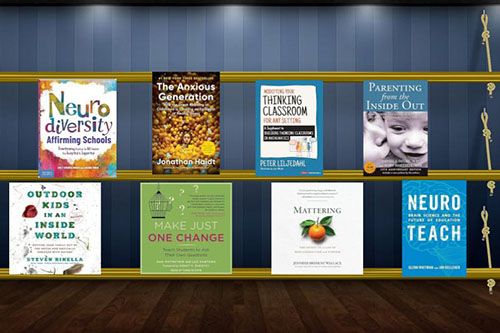 Jun4What's on Our Summer Reading List
The upcoming break provides a great opportunity for our faculty and staff to dive into reading they may not have had time for during the school year. While their summer reading lists will surely include a few fun beach picks, many are also exploring titles that will inspire their work in the year ahead, whether through books on pedagogy, young adult novels, or picture books they may bring into their classrooms. See what our faculty and staff are adding to their summer stacks.
See Details