Designing an Excellent Curriculum
May 10th, 2023


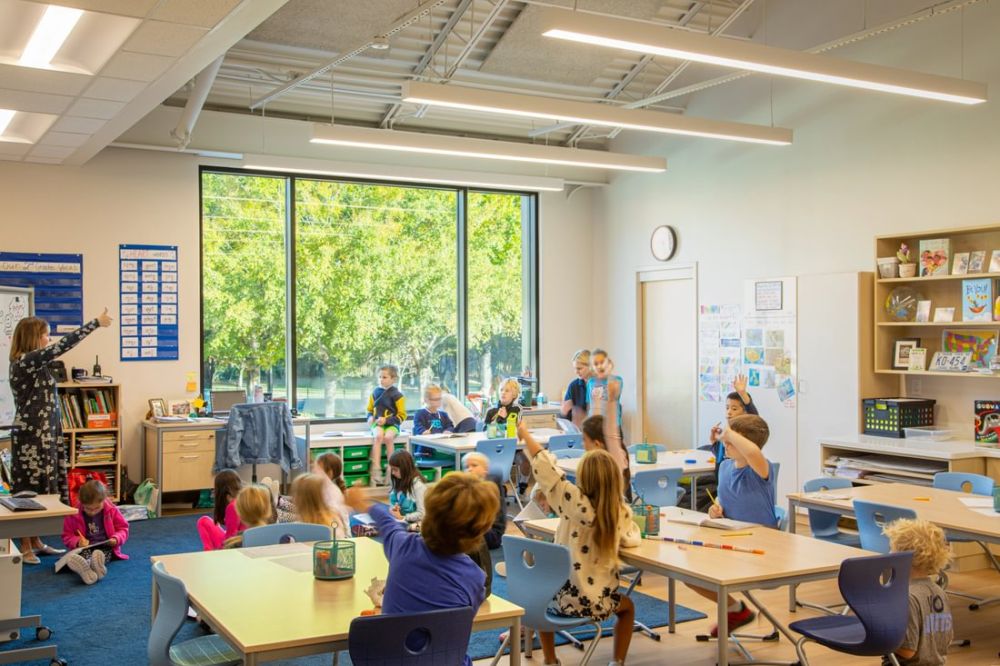
 At the heart of a school is the interplay between teaching and learning. We assume that when something is taught it is learned, but that is not always true. Good teaching is much more than the simple delivery of information, and students are not passive recipients of knowledge. The old models of education are largely to blame for this misunderstanding of what effective teaching is. Schools that emerged during the industrial age modeled their methods on the factory assembly line. Students were the product and the various subjects were the raw materials that were “installed” along the way. This was an efficient method of providing an education but it had significant limitations. Unfortunately, the factory model of education persists to this day and has shaped the interplay of teaching and learning for generations.
This old educational model often leads to facile understanding and limited acquisition of skills that can then be transferred to new learning and experiences. It is far better to plan teaching around one simple but important question: what should students know and be able to do? Once this question is answered, the curriculum and learning experiences of students can then be planned. This approach is known as backward design – we start with the desired results and plan accordingly.
When teaching begins at the endpoint – the skills, knowledge, and understanding students should acquire and apply to real life – the curriculum is transformed. It is no longer a case of merely covering material – just think about how much material you “covered” in school that was quickly forgotten and rarely utilized for a productive purpose. Backward design, which is also called understanding by design, is focused, instead, on learning that is meaningful and relevant. For example, instead of just covering information about scientists and scientific discoveries (which does have some value), students learn how to act like scientists themselves (which is what they should know and be able to do). They apply skills and knowledge to real life and benefit greatly from these connections.
As we engage in curricular work at Prep, we will utilize the backward design approach. It is important to note that backward design is not a philosophy of education or a prescribed curriculum. It is, instead, a lens through which we can examine what and why we teach. Having worked with backward design at a previous school, I have seen its benefits and the dramatic impact it can have on the quality of teaching and learning, and I am excited to see similar benefits at Prep.
More News from Charlotte Prep
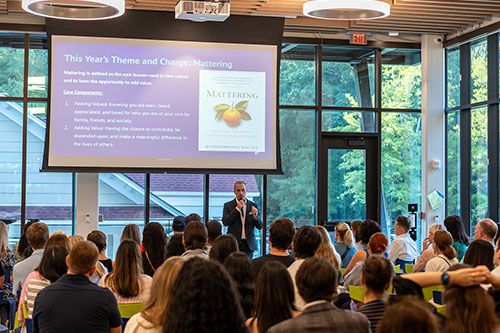 Sep3A Campus Culture Where Everyone Matters
Last week, a parent told me that her child begs to come to school and doesn’t want to leave at the end of the day, something she never felt as a kid. That conversation offered a great image for what I want our theme to be this school year: Mattering.
See Details Apr308th-Grade Ignite Presentations
Have you ever sat through a presentation that felt like it lasted a century? The Ignite movement seeks to end boring presentations forever, and in Charlotte Prep’s leadership class, 8th graders are learning to craft Ignite-inspired presentations of their own.
See Details Apr16Hot off the Press: First-Grade News
From interviewing campus staff to doing deep research, students in Mrs. Gilmartin and Mr. Stedman’s classes are hard at work on their monthly newspapers.
See Details Apr9Testing at Charlotte Prep
In our classrooms, we do not “teach to the test” or hang the threat of end-of-grade exams over students’ heads as motivation to participate in learning. Engagement and participation are driven by relationships, meaningful learning experiences, and students’ interests, strengths, and curiosity.
See Details