Managing Your Child's Screen Time
November 20th, 2025
If there is one foreboding phrase I hated hearing as a new parent, it’s “That’s what you think now, but just wait until…” That phrase instantly plants doubt and fear that a “naive” parent won’t be sturdy enough to handle a situation as they’d like or follow through despite obstacles. I often hear these words when I share my family’s approach to devices. My kids don’t use devices at all aside from a school Chromebook and won’t have phones until at least 8th grade.
Each time I am met with the refrain of “just wait until their friends have phones” or “just wait until your 6-year-old wants video games,” I temper my inner wave of panic with a reminder that I feel secure in my ability to uphold that parenting choice. Life without devices is less stressful but more hands-on.
To be clear, my kids love to watch TV—mostly baking shows, Pokémon, and movies. I enjoy them too because I can be a part of the experience even if I am cooking dinner while they gape at the latest Is It Cake? illusion. They are not, however, using screens that I cannot see (iPads or phones) or using YouTube, apps, or video games for entertainment.
I have been asked if I worry that my children will be left out of certain conversations or bonding with peers over Roblox and Minecraft characters. Yes, they will be left out but, no, I do not worry. I will gladly fill that time with ways for them to move their bodies, be creative, or even (gasp) be bored. My living room and kitchen table will be a mess with books and games and activities, and I will remind myself that this means good things are happening.
Research consistently supports that the longer you wait to give your child an internet-enabled device, the more protection you offer them. Delaying not only reduces exposure to content they may not be ready for, but also gives their brains time to further develop identity and decision-making skills. When they do eventually encounter inappropriate or confusing material, they will be better equipped to respond.
This works for us because it aligns with what makes me feel confident and at ease as a parent—not doubtful or distressed. I know my children will need a phone one day and use devices for entertainment, but I also know that I will put that off as long as I feel comfortable. For now, I enjoy that I don’t have to monitor devices or negotiate screen-time limits.
Choosing a Device Approach That Fits Your Family
My choice is not the only good choice for families. Regardless of what a parent decides, the first goal in device usage is to identify what your comfort level is—and what will not cause nagging doubt or distress. Does that balance with what you know to be healthy for your child? Until you define your own family goals (not those compared to other families or what your kids insist they need), it will be hard to create boundaries that you can consistently stick to.
Know your ideals. Hold firm to them, but save room to reassess from time to time. Seek input from a few trusted people with similar values, but not too many voices at once. There is more than one way to raise a healthy child, either with or without devices. Most importantly, stay connected to what you value even when it isn’t convenient.
We recommend the following resources:
Healthychildren.org, specifically their media plan tool
Screenagers documentary
Books: iGen, The Anxious Generation, Good Pictures Bad Pictures Jr. (for kids)
In the end, the right device plan is simply the one you can uphold with confidence.
More News from Charlotte Prep
 Sep24Building the Foundations for Student Learning
During our in-service professional learning day in August, we reflected on six years of curriculum development since launching our summer grant program in 2021. What began that year as a group of only eight teachers has grown into a cohort of twenty-four summer grant participants, all working to strengthen and elevate our academic program.
See Details Sep17Get to Know Katie Keels
Joining Charlotte Prep as director of philanthropy this year, Katie Keels brings 14 years of advancement experience, 11 of which were spent at a K-8 school. Read our Q&A to discover what inspires her approach to philanthropy and her vision for nurturing a joyful, community-centered culture of giving.
See Details Sep3A Campus Culture Where Everyone Matters
Last week, a parent told me that her child begs to come to school and doesn’t want to leave at the end of the day, something she never felt as a kid. That conversation offered a great image for what I want our theme to be this school year: Mattering.
See Details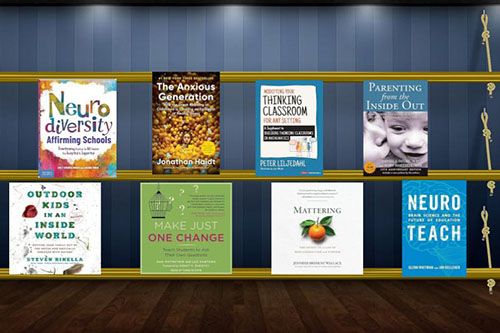 Jun4What's on Our Summer Reading List
The upcoming break provides a great opportunity for our faculty and staff to dive into reading they may not have had time for during the school year. While their summer reading lists will surely include a few fun beach picks, many are also exploring titles that will inspire their work in the year ahead, whether through books on pedagogy, young adult novels, or picture books they may bring into their classrooms. See what our faculty and staff are adding to their summer stacks.
See Details